
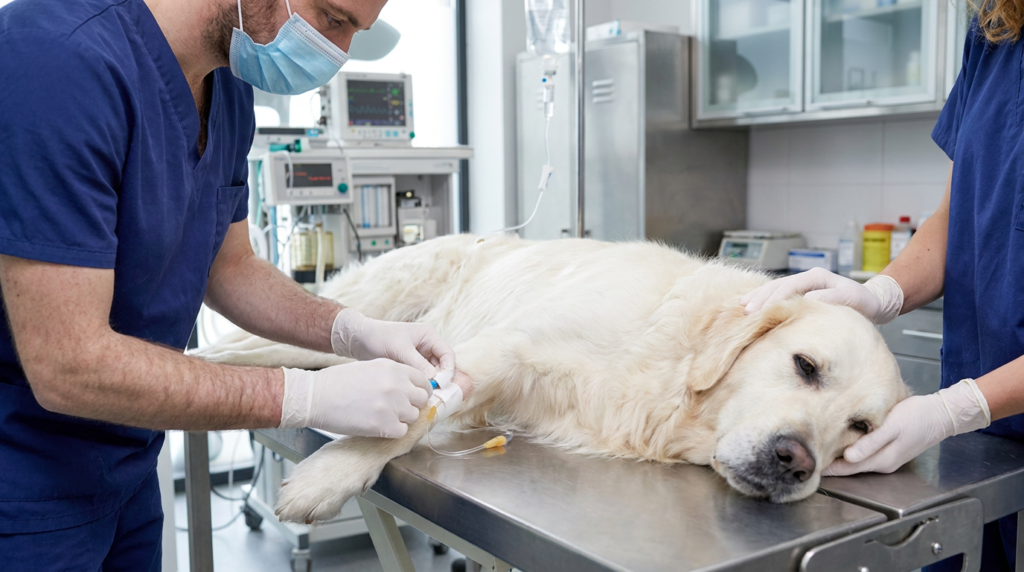



This summer my 13-year-old cat Milo spent three hours at the vet because he couldn’t stop throwing up. No crazy adventure, no swallowed sock. He’s an indoor cat whose biggest outing is the patio. By the time they’d examined him, run bloodwork, given him IV fluids with mild sedation and sent us home with medication to help him keep food down, the bill was about $1,000 Canadian (roughly $710 U.S.).
I didn’t have pet insurance. So is pet insurance worth it? I’ve spent a lot of time with that question since, and the honest answer depends less on your pet than on one thing: whether a surprise bill would wreck your month.
You’re in good company if it would. Nearly half of U.S. pet owners now say unexpected vet costs worry them, up from about a third in 2022. Below is the math I wish I’d seen before Milo’s visit, including when insurance isn’t worth it.
Is Pet Insurance Worth It?
You get real vet costs, a worked example from my own uninsured bill and a four-step way to decide for your pet.
FYI, if you shop through our links, we earn a commission at no extra cost to you.
What Is Pet Insurance?
Pet insurance is a policy that pays back part of your vet bill after an accident or illness. You usually pay the vet first, then file a claim. The insurer subtracts your deductible and reimburses a set percentage (often 70%, 80% or 90%) of the rest, up to an annual limit. Most plans exclude conditions that showed up before you enrolled, and routine care like vaccines is only covered with an optional wellness add-on.
Why So Many Pet Owners Are Asking This Right Now
Vet care keeps getting more expensive. The government’s price index for veterinarian services was up 4.6% year over year in September 2026, and vet prices have climbed more than 55% since 2019. Wages haven’t kept up, and you can see it in how owners are coping.
- Nearly 1 in 2 owners say unexpected vet expenses worry them, according to a 2025 survey of 4,861 owners by Synchrony, the company behind CareCredit pet financing (Synchrony, as reported by AVMA News).
- More than 1 in 4 owners say a surprise bill of $250 or less would stress them (AVMA News).
- 52% of owners skipped or declined needed vet care in the past year, and 71% of them said cost was the reason (Gallup).
- 94% of vets say clients’ finances at least sometimes stop recommended care (Gallup).
- Only about 4.3% of U.S. pets are insured: roughly 6% of dogs and 2.3% of cats (NAPHIA).
The $3,000 Vet Bill Test
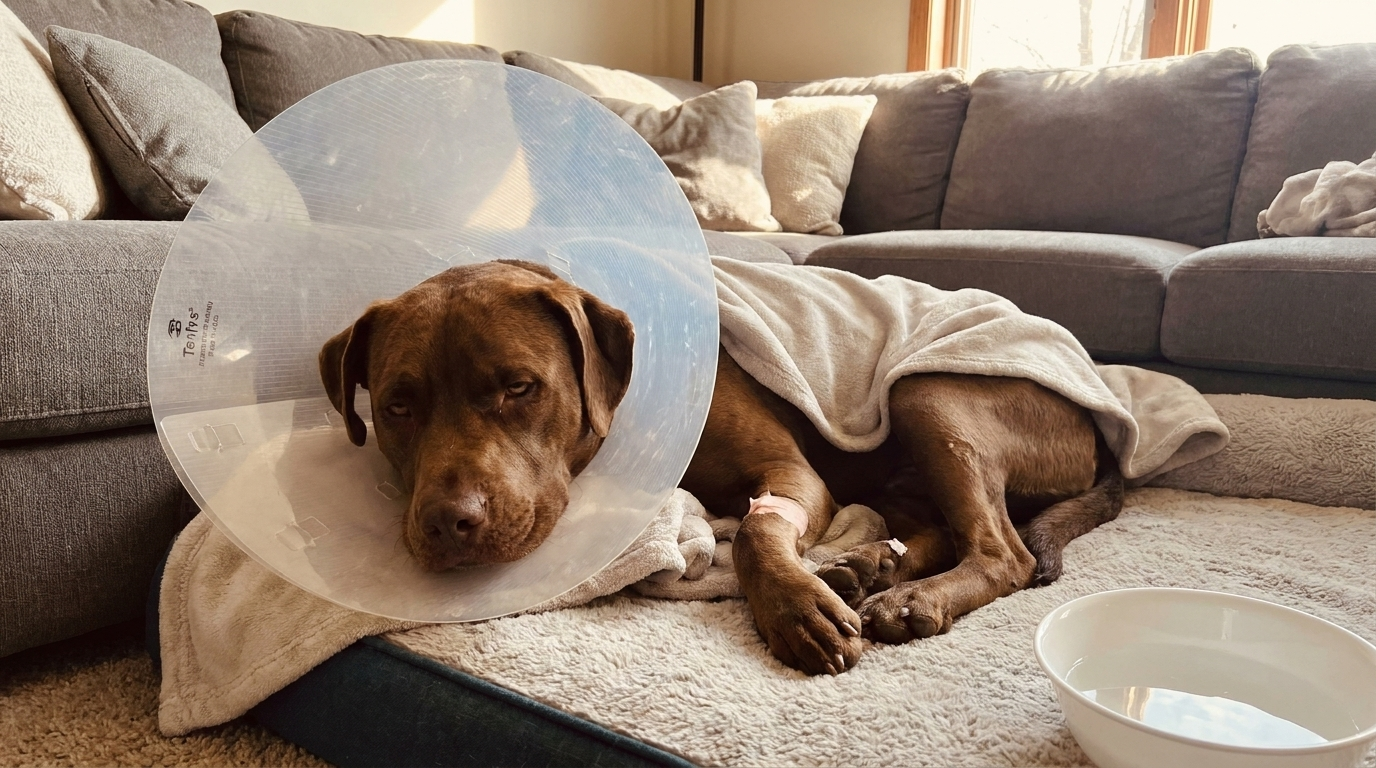
Forget the brochures for a minute. The quickest way to answer “is pet insurance worth it” is to picture three bills and ask which one you could pay this week without debt or a hard choice.
Could you pay these this week?
- 1$250A sick visit with an exam and a quick test. More than 1 in 4 owners say a bill this size would stress them.
- 2$1,000A no-diagnosis visit like Milo’s. Two-thirds of owners say $1,000 is the most they could pay for lifesaving care.
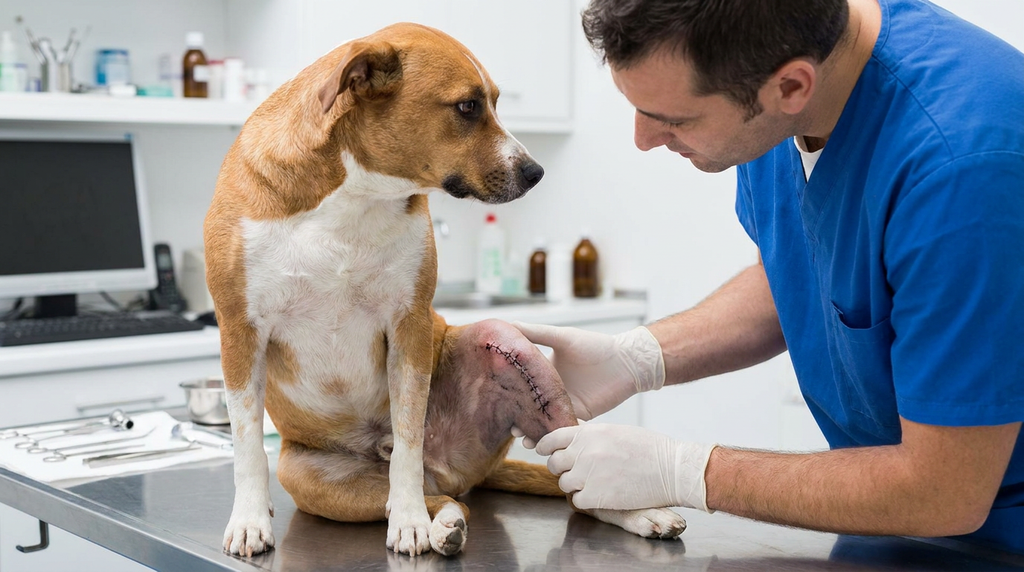
- 3$3,000+Surgery territory: a swallowed object, a urinary blockage or a torn knee ligament.
Those numbers are real. The average unexpected vet bill was about $1,100 in a 2025 survey, and 15% of owners had faced one of $3,000 or more (MetLife survey). Surgery to remove a swallowed object typically runs $2,000 to $10,000, and knee ligament (TPLO) surgery runs $6,000 to $10,000 per knee.
If the $250 bill stings, the $1,000 bill means a credit card and the $3,000 bill means an impossible decision, insurance is worth a close look. If you could cover all three from savings, keep reading, because there’s a solid case against insurance too.
When Pet Insurance Isn’t Worth It
On average, premiums cost more than claims pay back. That’s how insurance works, for cars and houses too, and pet insurance is no different.
Consumers’ Checkbook and Purdue University’s vet school modeled 12 insurers over a pet’s lifetime in 2025. Insurance lost money even for a dog with moderate health problems, and only came out ahead for a pet with severe illness. They estimate the odds of a $1,000+ bill in any given year at just a few percent (Checkbook). The South Carolina Department of Insurance reaches the same conclusion and adds that premiums usually start climbing around age 4 or 5 (SC DOI).
Owners on Reddit say the same thing in plainer language. One owner of a 10-year-old Lab estimated paying about $20,000 in premiums over the years (r/personalfinance).
Worth it if
- A big bill would mean debt. Or choosing treatment based on your bank balance.
- You enroll young. Before any condition can be called pre-existing.
- Your breed has known issues. Joint, heart or breathing problems are expensive and common.
- You want peace of mind. Some people value never having to make that call.
Probably not worth it if
- You can cover $3,000 to $5,000 from savings. And you will actually keep that money set aside.
- Your pet is older with existing conditions. Exclusions and higher premiums can cancel out the benefit.
- You would only buy a cheap, low-limit plan. A $2,500 cap won’t touch a major surgery.
When Pet Insurance Is Worth It
Insurance earns its keep with the big, long or ongoing problems: cancer, chronic illness and surgery. One Reddit owner whose dog developed an autoimmune disease said the policy “covered the costs and more for several years” (r/personalfinance). Another, whose puppy was diagnosed with epilepsy, called it “10000% worth it” (r/DogAdvice).
It also matters for a quieter reason. When cost decides treatment, pets suffer. In the Gallup survey, 10% of owners who declined care said their pet worsened and died within three months (Gallup).
Is Pet Insurance Worth It for an Indoor Cat?
I used to think indoor cats were the safe bet. Milo is the reason I don’t anymore. Indoor cats don’t get hit by cars, but they still get sick, and the common problems aren’t cheap.
The vet never found a cause for Milo’s vomiting. In hindsight, my best guess is that he was overeating a lower-quality “fast food” style kibble, which seemed to give him reflux and even made him gag drinking from the tap. That’s my theory, not a diagnosis. Smaller, measured meals fixed it. He’s down 1 to 1.5 pounds and back to his old self.
For the insurance question, the key detail is that nobody knew any of that during the crisis. The bill paid for finding out: the exam, bloodwork, fluids and monitoring cost the same whether or not we got an answer. Diagnostic visits like that are exactly what accident and illness coverage is for. Insurer claims data shows how common these indoor-cat bills are. In Nationwide’s data, the high end of the first month’s cost for common cat conditions runs about $802 for gastroenteritis, $943 for urinary tract disease and $1,517 for dental disease (Nationwide, an insurer). A urinary blockage, which is an emergency for male cats, costs about $2,000 with no complications (University of Florida)
Is Pet Insurance Worth It for Dogs?
For dogs, the strongest case is orthopedic. Torn knee ligaments are common, often happen in both knees over time and cost $6,000 to $10,000 per knee to repair. Dogs also swallow things they shouldn’t far more often than cats. That’s why the average accident and illness premium is higher for dogs: $836 a year for dogs vs. $435 for cats in 2025 (NAPHIA).
One thing to watch: several insurers have a longer waiting period or extra rules for knee and hip problems, and some permanently exclude a knee issue that was ever noted before you enrolled. If you have a large or active breed, read that section of the policy first.
What My $1,000 Vet Bill Would Have Looked Like With Insurance
I ran Milo’s visit through a typical plan: $250 deductible and 80% reimbursement. This is an illustration, not a quote, and it uses the U.S. dollar amount of about $710.
Milo’s visit, run through a typical policy
You pay this first.
Reimbursement covers 80% of what’s left.
About half the bill comes back.
Now compare that with what the policy costs. The average accident and illness premium for a cat was $435 a year in 2025, and a 13-year-old cat would pay well above average.
So for that one visit, insurance wouldn’t have paid for itself. I’m fine admitting that. What it would have done is cap my risk if the cause had turned out to be something serious, like a blockage or cancer. It would also have given me more breathing room if I wanted to do some more exploratory procedures to get to the bottom of things, which I was hesitant to do because of the cost. That’s the real job: you aren’t insuring the $1,000 bill. You’re insuring the $5,000 one you can’t predict.
Buy before the first big vet visit
If I insured Milo today, his stomach trouble would likely be treated as pre-existing and excluded until it counts as cured. That’s 180 symptom-free days at Spot and 12 months at Embrace, Fetch and Lemonade.
The best time to buy is when your pet is young and healthy, before there’s anything in their records to exclude.
The Fine Print
- Exam fees. Some insurers don’t cover the exam itself, which is a big part of a sick visit.
- Deductible order. Subtracting the deductible first pays more than applying the percentage first.
- Pre-existing conditions. Rules range from “covered once cured for 180 days” to “never covered.”
- Rising premiums. Average premiums rose about 12% in 2025, and prices climb as pets age.
- Your state’s rules. In states that adopted the NAIC’s pet insurance model law, accident waiting periods are banned, illness waits are capped at 30 days and you get a 15-day free look for a full refund.
How the top pet insurers compare on the details that matter
| Insurer | Exam fees | Deductible applied | Illness wait | Max enrollment age | Pre-existing (curable) | Sample price: cat / dog |
|---|---|---|---|---|---|---|
| Spot | Covered | First (pays more) | 14 days | No upper limit | Covered after 180 days symptom-free | $17 / $35 |
| Trupanion | Not covered | Per condition, for life | 30 days | Before 14 | Excluded | $58 / $168 |
| Embrace | Add-on | First (pays more) | 14 days | 14 (accident-only after) | Covered after 12 months | $19 / $39 |
| Healthy Paws | Not covered | After reimbursement | 15 days | Before 14 | Covered after 365 days | $24 / $57 |
| Fetch | Covered | After reimbursement | Up to 15 days | No upper limit | Covered after 12 months | $22 / $30 |
| MetLife | Covered | First (pays more) | 14 days | No upper limit | Covered after a symptom-free period | $24 / $53 |
| Lemonade | Add-on | After reimbursement | 14 days | 14 | Covered after 12 months | $14 / $30 |
Check out our full rankings live in the Best Pet Insurance guide.
The Pet Insurers Worth a Look
If insurance makes sense for you, these are the plans I’d compare first. Our full rankings live in the Best Pet Insurance guide.
- Spot: covers exam fees, takes the deductible off first and enrolls pets of any age. Curable conditions can be covered after 180 symptom-free days.
- Trupanion: one deductible per condition for life and direct payment to your vet at checkout. It doesn’t cover exam fees and costs more.
- Embrace: a 14-day illness wait, and its 6-month knee waiting period drops to 14 days with a vet orthopedic exam.
- Healthy Paws: fast claims, averaging two business days, but no exam fee coverage.
- Fetch: covers exam fees, with no upper age limit and no wait for accidents.
- MetLife: covers exam fees, a deductible that drops $50 each claim-free year and no age limit.
- Lemonade: among the lowest sample prices, but no unlimited annual limit and a 30-day orthopedic wait.
Still deciding? Start with Spot.
Spot covers exam fees, takes your deductible off first and has no upper age limit to enroll, which matters for older pets like Milo.
- Accident and illness waits: 14 days
- Reimbursement: 70, 80 or 90%
- Exam fees covered
How to Decide: Is Pet Insurance Worth It for You?
- Run the three-bill test. Which of $250, $1,000 and $3,000 could you pay this week?
- Check your pet’s age and history. Young and healthy is the best time to buy.
- Add up 10 years of premiums. The South Carolina insurance department suggests this before you sign.
- Compare the fine print. Exam fees, deductible order, waiting periods and pre-existing rules.
Four steps to your answer
- 01Run the bill testWhich of $250, $1,000 and $3,000 could you pay this week?
- 02Check age and historyYoung and healthy is the best time to buy.
- 03Add up 10 yearsTotal the premiums before you sign anything.
- 04Compare the fine printExam fees, deductible order, waits and exclusions.

FAQ
Is pet insurance worth it for dogs?
It often is, especially for large or active breeds. Dogs are more likely to need expensive surgery, like $6,000 to $10,000 per knee for a torn ligament.
- Enroll young, before any knee or hip issue is in their records.
- Check the orthopedic waiting period.
Is pet insurance worth it for cats?
It can be. Cat premiums average about $435 a year, and urinary blockages, stomach trouble and dental disease are common and costly.
- Male cats are at higher risk of urinary blockage, a true emergency.
Is pet insurance worth it for an indoor cat?
Yes, it can be. Indoor cats avoid accidents but still get sick, and a single diagnostic visit can approach $1,000.
- The bill covers finding out what’s wrong, even when there’s no diagnosis.
Is pet insurance worth it for older pets?
It’s harder to make the math work. Premiums rise with age and existing conditions are usually excluded.
- Some insurers stop accepting new pets around age 14.
- Spot, Fetch and MetLife list no upper enrollment age.
Is pet insurance worth it for a puppy or kitten?
This is the best time to buy. Nothing is pre-existing yet and premiums are at their lowest.
- Puppies are also prone to swallowing things they shouldn’t.
What can I do instead of pet insurance?
Build a dedicated pet emergency fund, ask your vet about payment plans and be careful with deferred-interest financing.
- A savings account works if you can reach $3,000 to $5,000 and leave it alone.
Do vets accept pet insurance?
Almost always. Most insurers reimburse you after you pay, so you can use any licensed vet.
- Trupanion can pay participating vets directly at checkout.
Is a $10,000 annual limit enough?
For most pets, yes. It covers a typical knee surgery or cancer treatment, though unlimited plans exist if you want the extra cushion.
- Very low limits like $2,500 may not cover one surgery.
Does pet insurance cover pre-existing conditions?
Usually not. Many insurers will cover a curable condition after a symptom-free period, often 6 to 12 months.
- Chronic conditions like diabetes stay excluded.
Final Thoughts
- Choose insurance if a $3,000 bill would mean debt or a hard choice, especially for a young pet.
- Choose a savings plan if you can set aside $3,000 to $5,000 and leave it alone.
- Choose carefully if your pet is older. Read the pre-existing and age rules before anything else.
- Either way, decide before you need to. The worst time to think about this is in the vet’s waiting room.
Milo’s $1,000 scare looks like it was a food problem with a cheap fix. I got lucky. If it had been something bigger, I would have wanted the decision about his care to be about him, not my bank balance. Pet insurance, or a well-funded savings account, is how you make sure it is.
Check out our full rankings live in the Best Pet Insurance guide.

|

|

|
|
Description: Spot Pet Insurance offers flexible, comprehensive coverage with plans that include accidents, illnesses, exam fees, behavioral issues, dental illnesses, prescription food, and alternative therapies. Pet parents can visit any licensed vet in the U.S., and policies include helpful extras like a 24/7 pet telehealth line and over $2,500 in partner perks and discounts.* |
Description: Trupanion takes a different approach than most pet insurance providers. Instead of juggling reimbursement percentages and annual limits, you get a straightforward plan that always pays 90% of covered costs, with no caps on payouts. You choose your deductible anywhere from $0 to $1,000 using a flexible slider, and once it’s met, Trupanion can pay your vet directly at checkout. |
Description: Embrace Pet Insurance offers comprehensive coverage for accidents, illnesses, and chronic conditions with flexible reimbursement options and a diminishing deductible. Their plans include hereditary conditions, alternative therapies, and prescription medications. With nationwide vet coverage and a multi-pet discount, Embrace provides peace of mind for pet owners seeking extensive protection. |
Spot Pet Insurance offers flexible, comprehensive coverage with plans that include accidents, illnesses, exam fees, behavioral issues, dental illnesses, prescription food, and alternative therapies. Pet parents can visit any licensed vet in the U.S., and policies include helpful extras like a 24/7 pet telehealth line and over $2,500 in partner perks and discounts.*
Trupanion takes a different approach than most pet insurance providers. Instead of juggling reimbursement percentages and annual limits, you get a straightforward plan that always pays 90% of covered costs, with no caps on payouts. You choose your deductible anywhere from $0 to $1,000 using a flexible slider, and once it’s met, Trupanion can pay your vet directly at checkout.
Embrace Pet Insurance offers comprehensive coverage for accidents, illnesses, and chronic conditions with flexible reimbursement options and a diminishing deductible. Their plans include hereditary conditions, alternative therapies, and prescription medications. With nationwide vet coverage and a multi-pet discount, Embrace provides peace of mind for pet owners seeking extensive protection.

