
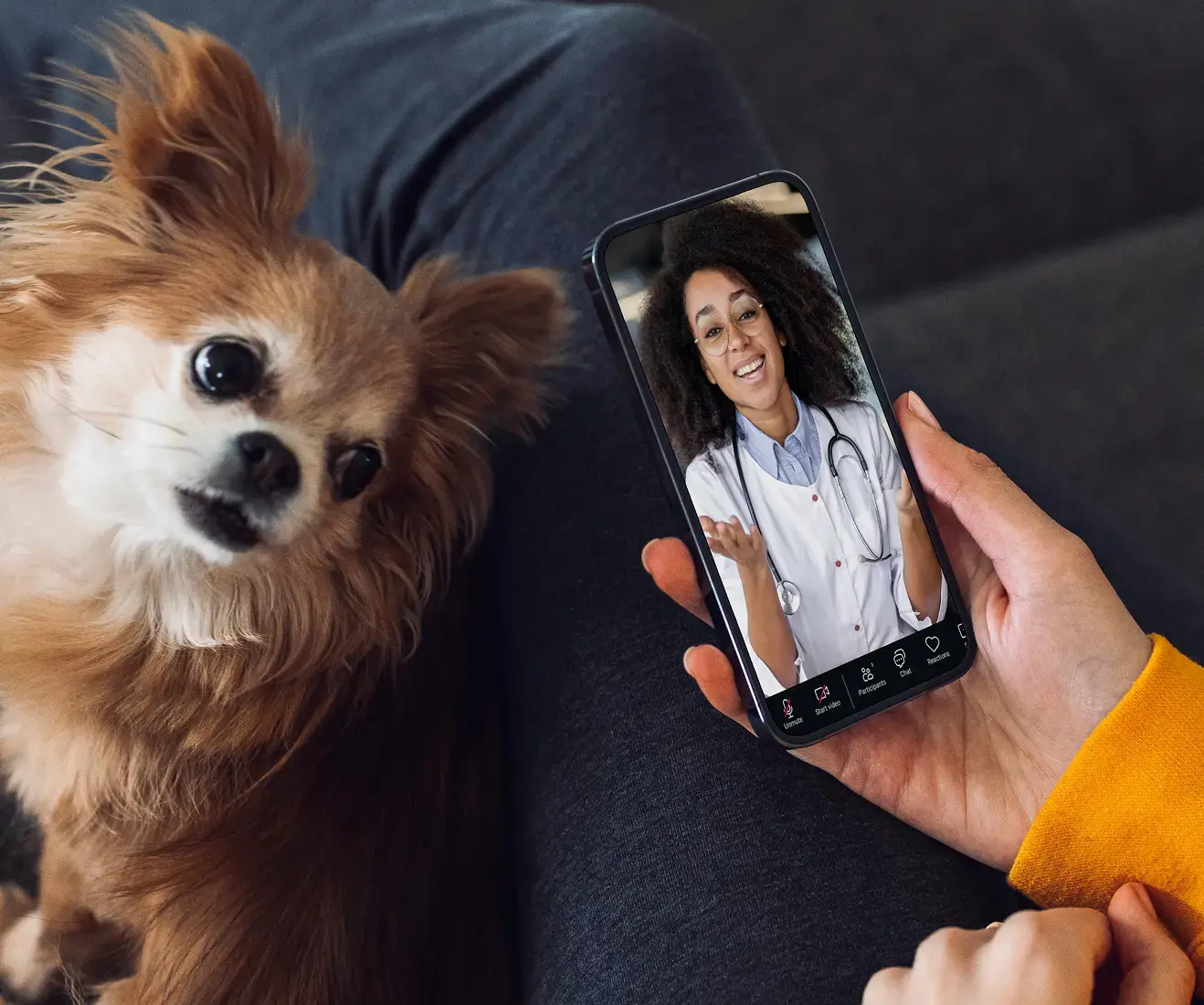
A vet visit from the couch: Dutch connects members with licensed veterinarians by video and messaging.
Most pet health problems do not begin with an obvious emergency.
They start with something small: an itchy paw, a red ear, an upset stomach, a sudden behavior change, or a pet who simply seems “off.”
That leaves pet parents with an uncomfortable decision. Do you wait and see whether it improves—or spend the time and money required for an in-person appointment?
Dutch was created for that uncertain space between doing nothing and rushing to a veterinary office.
The service connects pet parents with licensed veterinarians through video appointments and messaging. Members can ask questions, discuss symptoms, receive treatment plans, and—where state law permits—get prescriptions delivered to their homes.
Its annual membership currently costs $132 per year and includes unlimited video consultations for up to five pets. Medication is priced separately.
After reviewing the service, its pricing, customer feedback, and the situations it can and cannot handle, here is what pet parents should know.
Our Quick Take on Dutch
Best for
- Pet parents who want faster answers about non-emergency concerns
- Dogs or cats who become anxious, aggressive, or carsick at the vet
- Multi-pet households
- People who need evening or weekend availability
- Ongoing follow-up questions and prescription management
- Anyone who frequently wonders, “Is this something I need to worry about?”
May not be right for
- True medical emergencies
- Conditions requiring imaging, bloodwork, surgery, or a physical examination
- Pet parents who only want a single appointment without a membership
- Residents of states where virtual prescribing is restricted
Verdict: Dutch is not a replacement for every in-person veterinary visit. But for routine concerns, early intervention, follow-up care, and situations where getting to a clinic is difficult, it can be an extremely useful first step.
The strongest value may not be avoiding the vet altogether. It is having a licensed professional help you determine what should happen next.
For non-emergency concerns · Services vary by state
It Helps Answer the Question: “Should I Be Worried?”
One of the hardest parts of pet ownership is knowing whether a symptom is minor or the beginning of something more serious.
A dog may start licking one paw repeatedly. A cat may suddenly avoid its food. An ear may look slightly red. Your pet may be acting differently, but not dramatically enough to justify an emergency visit.
Waiting can feel risky. Scheduling an office visit for every questionable symptom can become expensive and exhausting.
Dutch gives members access to licensed veterinarians who can review symptoms, medical history, and uploaded photos or videos during a virtual appointment. The veterinarian can then recommend home care, prescribe treatment where legally permitted, suggest monitoring, or explain why the pet should be seen in person.
That guidance can be valuable even when the ultimate answer is, “This needs an in-person examination.”
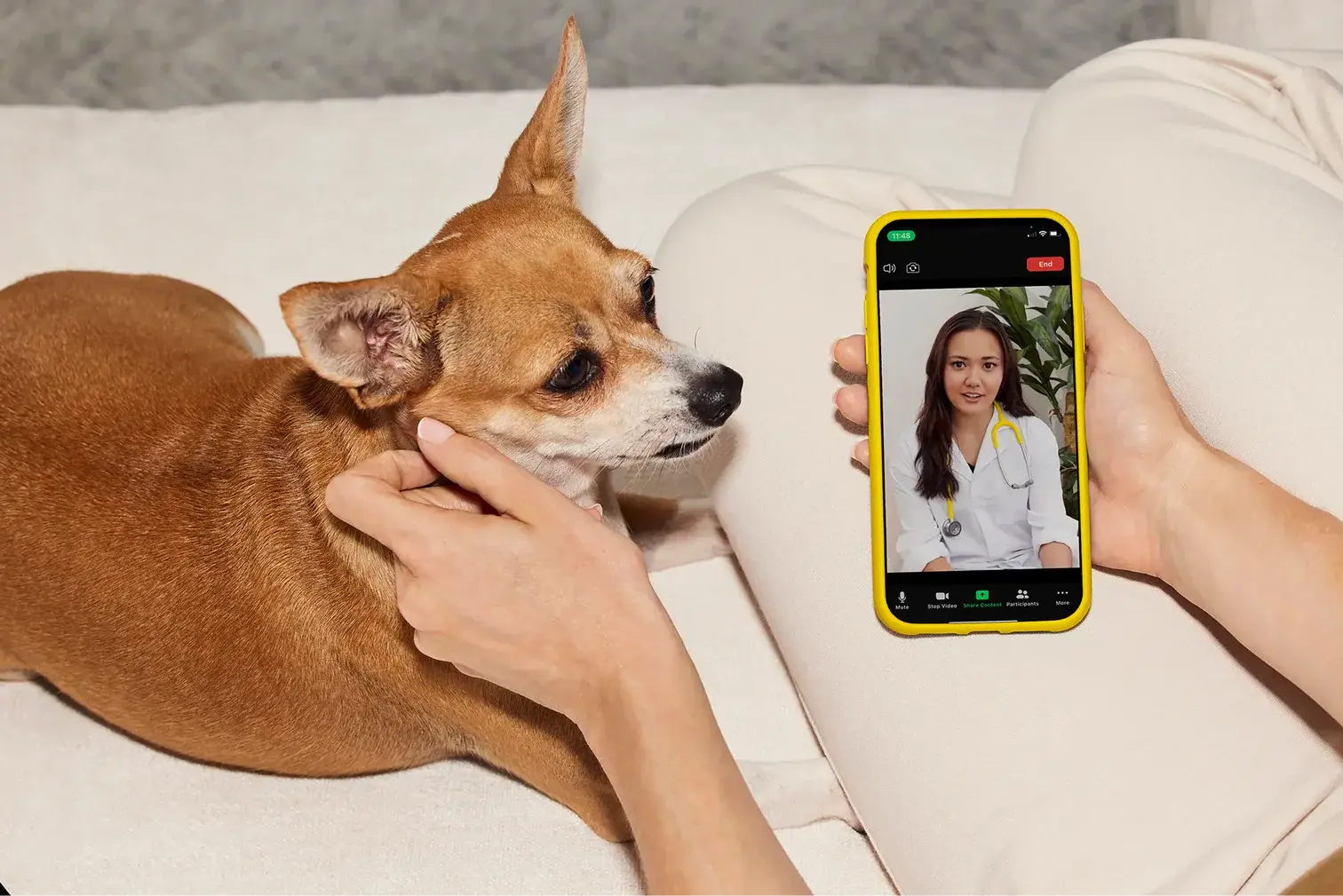
Noticed something small? A virtual visit can help you decide what should happen next.
Video appointments with licensed veterinarians
There Is No Stressful Waiting Room
For some pets, the appointment itself is not the worst part.
It is everything required to get there.
The carrier. The car ride. The unfamiliar smells. Other animals. A crowded waiting room. Being handled by strangers.
This can be especially difficult for:
- Anxious or reactive dogs
- Cats who resist carriers
- Elderly pets with limited mobility
- Large dogs who are difficult to transport
- Pets who become carsick
- Households with several animals
Dutch lets the pet remain in a familiar environment while the owner speaks with the veterinarian.
A virtual visit may also allow the veterinarian to observe behaviors that occur naturally at home but disappear in an unfamiliar clinic.
Naturally, some conditions still require hands-on care. But when a physical examination is not immediately necessary, removing the transportation and waiting-room stress can make the entire process easier for both the pet and the owner.

No carrier, no car ride: pets stay where they are most comfortable.
Appointments Are Available When Traditional Offices Are Closed
Pet health concerns rarely appear at a convenient time.
It is often after work, late at night, or over the weekend when you notice a rash, stomach problem, behavior change, or possible infection.
Dutch offers same-day appointments in many locations, including evening and weekend availability.
This makes it particularly useful when:
- Your regular veterinary office has closed
- The next local appointment is several days away
- You are traveling with your pet
- You need guidance but the situation does not appear life-threatening
- You want to know whether the concern can safely wait
For genuine emergencies—such as difficulty breathing, collapse, poisoning, uncontrolled bleeding, serious trauma, or seizures—pet parents should seek immediate in-person emergency care.
One Membership Covers Up to Five Pets
Dutch currently charges $132 annually, or the equivalent of $11 per month, for its annual membership.
The membership includes unlimited video consultations and follow-up care for up to five dogs or cats. Prescription medications are purchased separately.
That pricing structure is particularly compelling for multi-pet households.
Example use cases
A household with three pets could use Dutch for:
- A dog’s recurring skin irritation
- A cat’s digestive problem
- A second dog’s anxiety or behavior questions
- Follow-up questions after an in-person procedure
- Routine prescription management
The membership becomes less compelling for someone who rarely needs veterinary advice and strongly prefers in-person care. But for owners who routinely have questions—or care for several pets—the unlimited model can provide meaningful value.
- Unlimited online vet visits
- Covers up to five pets
- Medication sold separately
Current advertised pricing · Subject to change
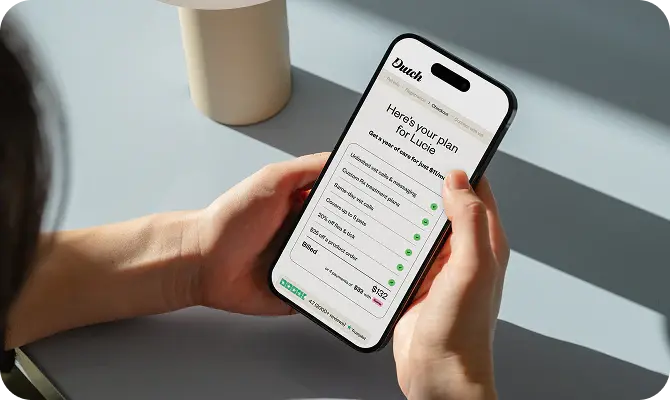
Dutch’s plan screen: unlimited vet calls and messaging, same-day video calls, and coverage for up to five pets.
Current advertised pricing · Medication sold separately
The Appointment Does Not End When the Video Call Does
Traditional veterinary visits can create a new problem: you think of your most important question after you leave.
Dutch memberships include follow-up care and messaging, so members can continue asking questions without paying for another standard consultation each time.
This may be useful when:
- A pet has started a new medication
- Symptoms are improving but have not disappeared
- The owner is unsure whether a side effect is normal
- A treatment plan needs adjustment
- An in-person vet provided a diagnosis but limited follow-up guidance
- A chronic concern requires continued monitoring
For many pet parents, ongoing access may be more valuable than the initial appointment itself.
Prescriptions Can Be Delivered to Your Door
When clinically appropriate and legally permitted, a Dutch veterinarian can prescribe medication after a virtual consultation.
The prescription can then be filled through Dutch’s pharmacy and shipped to the customer.
- Schedule a video appointment
- Discuss symptoms with a licensed veterinarian
- Receive a personalized treatment recommendation
- Order an approved prescription when appropriate
- Continue communicating with the veterinary team during treatment
Some states allow the necessary veterinarian-client-patient relationship to be established remotely. Other states require an in-person examination before certain diagnoses or prescriptions can be provided. Confirm availability in your state before joining.

Where state law permits, prescriptions can be filled through Dutch’s pharmacy and shipped home.
The Veterinarians Receive Consistently Strong Feedback
Convenience would mean little if the medical experience felt rushed or impersonal.
The customer feedback reviewed for this article repeatedly praised the veterinarians themselves.
Common positive themes included:
- Caring and patient communication
- Thorough questions
- Clear explanations
- Prompt written treatment plans
- A willingness to listen
- Helpful follow-up communication
Not every customer experience is perfect. As with any appointment-based platform, availability, pharmacy delivery, billing expectations, and whether a condition can be treated remotely may affect satisfaction.
Still, even mixed feedback often distinguishes between frustrations with logistics and a positive experience with the veterinarian.
“The appointment was quick and easy, the veterinarian was thorough, and I received a clear treatment plan without putting my pet through a stressful office visit.”
What Can Dutch Help With?
Potential concerns include:
A virtual veterinarian may also determine that a condition cannot be treated safely online and recommend an office visit, laboratory testing, imaging, or emergency care.
That is not a failure of the service. In some cases, identifying the correct level of care is the most useful outcome of the appointment.
What Dutch Cannot Do
A virtual appointment cannot provide:
- A hands-on physical examination
- X-rays or other imaging
- Bloodwork
- Surgery
- Vaccinations
- Emergency stabilization
- Procedures requiring physical handling
- Certain prescriptions in states with more restrictive telemedicine laws
- Difficulty breathing
- Collapse or loss of consciousness
- Suspected poisoning
- Major trauma
- Uncontrolled bleeding
- Repeated seizures
- Severe abdominal swelling
- Inability to urinate
- Extreme distress or rapidly worsening symptoms
Dutch vs. a Traditional Veterinary Appointment
| Feature | Dutch | Traditional Vet |
|---|---|---|
| Visit format | Video appointment and messaging | In-person examination |
| Availability | Same-day options, including many evenings and weekends | Depends on local office availability |
| Travel required | No | Yes |
| Waiting room | No | Usually |
| Physical examination | No | Yes |
| Testing and imaging | No | Often available |
| Prescriptions | Available where state law permits | Available after in-person evaluation |
| Pricing | $132 annual membership; medication separate | Typically charged per visit and service |
| Number of pets | Up to five pets under one membership | Usually billed separately |
| Follow-ups | Unlimited under membership | Policies and fees vary |
| Emergencies | Not appropriate | Emergency clinic required |
Dutch is not necessarily an alternative to having a regular veterinarian. For many pet parents, the better model may be to use both:
- Dutch for convenient access, early questions, routine concerns, follow-ups, and certain prescriptions
- An in-person veterinarian for examinations, vaccines, diagnostics, procedures, and complex conditions
- An emergency hospital for immediate or life-threatening situations
Pros and Cons
What we like
- Fast access to professional guidance
- No transportation or waiting-room stress
- Strong value for multi-pet households
- Evening and weekend availability
- Ongoing follow-up care
- Prescriptions available in many states
What to consider
- It requires an annual membership
- Medication is not included
- Not every condition can be treated virtually
- Prescription access varies by state
- It does not replace emergency care
Is Dutch Worth It?
For the right household, we think it can be.
Dutch is particularly compelling for people with several pets, animals who struggle with clinic visits, or owners who want convenient access to a veterinarian before a small concern has time to become a larger one.
The service is less compelling for someone who expects telehealth to replace every in-person appointment. It cannot perform tests, physically examine an animal, administer vaccines, or treat an emergency.
But that may be the wrong standard by which to judge it.
Dutch does not need to replace the traditional veterinarian to be valuable. It only needs to make professional veterinary guidance easier to access in the many situations where pet parents would otherwise wait, worry, search online, or make an unnecessary office trip.
At $132 per year for unlimited consultations covering up to five pets, it may cost less than many households would spend on a single traditional appointment.
Our verdict
Dutch is a strong option for convenient, non-emergency veterinary care—especially for multi-pet households and pets that find traditional office visits stressful.
Use it as an accessible first line of support, not as a substitute for physical examinations or emergency medicine.
For non-emergency concerns · Prescription availability varies by state
Frequently Asked Questions
Is Dutch a legitimate veterinary service?
How much does Dutch cost?
Can Dutch prescribe medication?
How quickly can I see a veterinarian?
Does the membership cover multiple pets?
Does Dutch replace a regular veterinarian?
Can Dutch treat an emergency?
When You’re Not Sure What Your Pet Needs, Getting an Answer Shouldn’t Take Days
Dutch gives pet parents convenient access to licensed veterinarians from home, with unlimited consultations for up to five pets under one annual membership.
See If Dutch Is Available Near You →For non-emergency concerns only · Services and prescription availability vary by state